University Admission in Turkey for International Students: A Complete Guide
University admission in Turkey for international students explained: eligibility, documents, costs, timelines and a step-by-step guide to applying to...
By Burak Ünal · · 10 min read
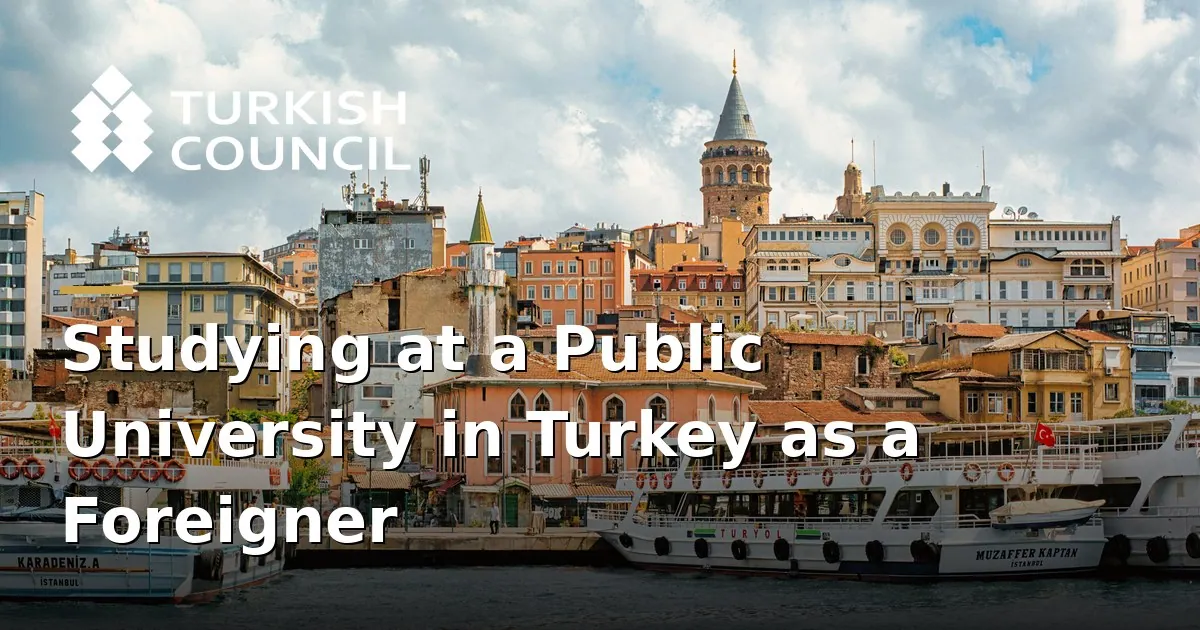
Studying at a public university in Turkey as a foreigner is fully possible, and for many international students it is the most affordable route to a recognised degree. You apply directly to each university with your high school diploma and, in many cases, an exam score such as the Foreign Student Examination, then secure a student visa and a residence permit once you are accepted. This guide walks you through admission, costs, documents and the practical steps for a public university in Turkey.
A public university in Turkey is a state-funded institution where tuition is set at modest, government-regulated rates, which makes it the lower-cost option for most international students. These universities are overseen by the Council of Higher Education (YOK), the body that recognises diplomas and sets national standards. When you study at a state university in Turkey, your degree carries the same official recognition as that of any Turkish student, which matters if you plan to work or study further later.
Foreigners study at every level: bachelor's, master's and doctoral. Some courses are taught fully in Turkish, others fully in English, and a number are bilingual. Choose your language track early, because it decides whether you need a Turkish proficiency certificate or an English one before you can register.
The main reason international students choose a public university in Turkey is cost paired with recognised quality. State tuition is modest next to private universities, as of the time this article is written, though medicine, dentistry and English-taught tracks sit at the higher end. Figures change every year and vary by university and programme, so confirm the current fee with the university or an advisor before you commit.
Beyond price, public universities in Turkey for international students offer broad subject choice, established campuses across the country, and a large community of foreign students. Istanbul, Ankara and Izmir host some of the oldest and most competitive institutions, while many regional cities offer strong programmes with lower living costs. In our experience advising international students, those who choose a city by both the programme and the living cost, not the name alone, settle in faster.
The core difference between a public university in Turkey and a private one is funding and price. A public, or state, university is government-funded and inexpensive, while a private (foundation) university charges market tuition that can run many times higher. Both types are recognised by YOK, so the choice is about budget, language options, class size and admission route rather than the value of the diploma.
For most budget-conscious students, a state university in Turkey is the natural starting point, while a private university suits those who want smaller classes and more English-taught options at a higher price.
To gain admission to a public university in Turkey, a foreigner generally needs a recognised high school diploma, proof of language ability, and in many cases an entrance exam score. Each university sets and publishes its own conditions for international applicants, so requirements differ from one institution to the next.
Many public universities in Turkey for international students weigh the YOS exam heavily for competitive faculties, while others accept a wider mix of qualifications. Always read the specific announcement (kontenjan) for the programme and intake year you are targeting.
The application to a public university in Turkey follows a clear sequence, and most of it happens online before you travel. Knowing how to study at a public university in Turkey starts with mapping these stages well ahead of the deadlines.
Because each university runs its own calendar, students often apply to several at once to improve their chances. Public university admission in Turkey for foreigners rewards early, organised applicants, so start at least a few months before the intake.
The cost of a public university in Turkey has two parts: tuition and living expenses. Tuition at state institutions is typically low, often a few hundred to around two thousand US dollars a year for many undergraduate programmes, as of the time this article is written, with medicine, dentistry and English-medium courses usually costing more. These figures shift each year, so confirm the current amount directly.
Living costs depend heavily on the city. A student in a smaller Anatolian city can live on noticeably less than one in central Istanbul. Many international students budget around 400 to 700 US dollars a month for accommodation, food and transport outside the largest cities, and more in Istanbul, as of the time this article is written. State dormitories, commonly known as KYK dormitories, are often the most economical housing, though places can be limited.
Once a public university in Turkey accepts you, you apply for a student visa at the Turkish consulate in your home country, then convert your stay into a student residence permit after arrival. The acceptance letter is the key document that unlocks both steps, which is why securing it early matters so much.
After you reach Turkey, you apply to the Directorate General of Migration Management (Goc Idaresi) for a student residence permit, usually within the first weeks of your stay. You will generally need enrolment proof, valid health insurance, proof of address and proof of funds. In our experience advising international students, the most common cause of delay is an incomplete document set, so prepare every item before your appointment. Visa and residence permit rules change often, so confirm the current requirements with the consulate or an advisor before you travel.
The language of instruction at a public university in Turkey is Turkish, English or a mix, and it shapes your whole preparation. For a Turkish-taught programme, you typically prove your Turkish level, often through a TOMER certificate, and many universities run a one-year Turkish preparatory class for students who are not yet fluent. For an English-taught programme, an accepted English test score usually replaces the Turkish requirement, though basic Turkish still helps daily life.
Even if you study in English, learning some Turkish makes the city, the paperwork and student life far easier. Many foreigners begin with a Turkish language course before or alongside their degree, which can also support a smoother visa and residence permit experience.
Studying at a public university in Turkey as a foreigner is an affordable, recognised path, as long as you plan the admission, language and visa steps early. Understanding how to study at a public university in Turkey, from documents to the visa, turns the process into a clear checklist. Confirm the current tuition, fees and rules before you apply, and you can earn a respected degree at a fraction of the cost of studying elsewhere.
Turkish Council is an Istanbul-based education consultancy that has guided international students from over 40 countries through Turkish language course visas, student visas, residence permits and university admission since 2020. To discuss your own plans, reach us by phone or WhatsApp at +90 532 431 80 50, by email at contact@turkishcouncil.org, or visit us at Merkez Mahallesi Hasat Sokak No:12A, 34384 Sisli, Istanbul. Contact us for more information.
Yes, a foreigner can study at a public university in Turkey at bachelor's, master's and doctoral level. You apply directly to each university as an international student, meet its admission and language conditions, then arrange a student visa and residence permit once accepted.
Tuition at a public university in Turkey is generally low, often a few hundred to around two thousand US dollars a year, as of the time this article is written. Medicine, dentistry and English-taught courses usually cost more, and figures change yearly, so confirm the current fee with the university.
It depends on the programme. Turkish-taught courses require proof of Turkish, often a TOMER certificate, while English-taught courses accept an English test such as TOEFL or IELTS. Many universities offer a one-year Turkish preparatory year for students who need it.
The YOS is the Foreign Student Examination used by many Turkish universities to assess international applicants. Some universities run their own YOS, others accept the OSYM version or alternatives such as the SAT. Check each university's announcement to see which exam it requires.
You shortlist programmes, sit any required exam such as the YOS, prepare your diploma, transcripts and language certificate, then apply online through each university's international admission portal. After you receive and accept an offer, you use the acceptance letter to apply for your student visa.
Yes. After you enter Turkey on a student visa, you apply to the Directorate General of Migration Management for a student residence permit, usually within your first weeks. You generally need your enrolment proof, health insurance, proof of address and proof of funds.
Degrees from a public university in Turkey are recognised by the Council of Higher Education (YOK) and are generally accepted internationally. Recognition in your own country can depend on local rules, so check with the relevant authority where you plan to work or study further.
Start at least several months before the intake. Exam registration, document preparation, certified translations and the visa process all take time, and public university admission in Turkey for foreigners rewards early, organised applicants who apply to several universities.
Turkish Council is an Istanbul-based (Sisli) education consultancy specialising in study-in-Turkey services for international students. Since 2020, our consultants have guided students from over 40 countries through Turkish language course visas, student visas and residence permits, and university admission, working in English, Turkish, French, Russian and Chinese. The firm is led by Burak Ünal, an education consultant who holds a BSc in Business Management from Bogazici University and an MSc in Finance from the London School of Economics, and is a Chevening Scholarship holder. We focus on clear, step-by-step guidance.
Disclaimer: This article is for general informational purposes only and you are strongly advised to consult a professional to evaluate your personal situation. No liability is accepted that may arise from the use of the information in this article.

Founder and Managing Director, Turkish Council
Burak Ünal founded Turkish Council in Istanbul in 2020 and advises international students and foreigners on Turkish language course visas, residence permits and university admission in Turkey. He has advised more than 100 students from more than 40 countries, in English, Turkish and French.
University admission in Turkey for international students explained: eligibility, documents, costs, timelines and a step-by-step guide to applying to...
A complete guide to private universities in Turkey for foreigners: English-taught degrees, admission requirements, tuition fees, how to apply and the...
An acceptance letter from a Turkish university confirms your place on a program.